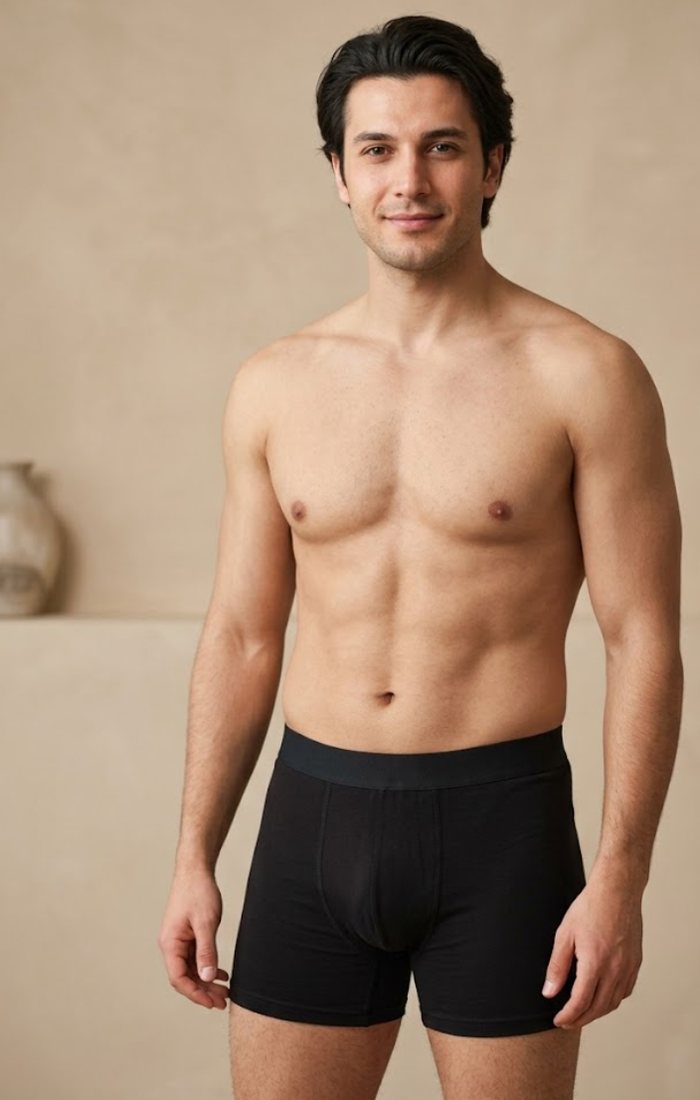
Understanding MOQ: How Low Minimums De-Risk a New Brand

MOQ — minimum order quantity — is the single number that decides whether a new underwear brand launches lean or gambles its cash on stock it hasn't sold yet. It is also the most misunderstood figure in a quote. Here is how MOQ actually works and how to keep it working for you, not against you.
What MOQ really measures
MOQ is usually set per style and per colour, not per order. That distinction is everything. A supplier who quotes a low "total" minimum but then requires that quantity for *each* colourway is far more expensive to launch with than one whose per-style-per-colour minimum is genuinely low.
Ask the question precisely: *"What is your minimum per style, per colour, per size run?"* The answer tells you how many distinct SKUs you can afford to test at launch.
Why manufacturers set a minimum at all
MOQ exists because setup has fixed costs that don't shrink with volume:
- Dyeing a colour lot is efficient only above a certain fabric weight.
- Knitting setup and cutting a marker take the same effort for 200 pieces or 2,000.
- Labels, packaging and artwork carry origination costs.
A vertically integrated maker — one that spins, knits and dyes in-house — can hold minimums lower than a broker, because it isn't stacking each vendor's separate minimum on top of the next.

How low MOQ de-risks a launch
The whole point of a low minimum is to let you buy small, sell, then reorder instead of pre-committing to a season of inventory. Concretely:
- You test more SKUs with the same cash. Split your budget across briefs, boxers and singlets rather than sinking it into one over-ordered style.
- You avoid dead stock. The colours and sizes that don't move don't sit in a warehouse tying up capital.
- You learn your real size curve. First orders reveal whether your market skews L/XL/2XL or the numeric 4/5 sizes — data you reinvest into the reorder.
- You protect cash flow. Money freed from excess stock funds marketing, which is what actually grows a young brand.
The trade-off to plan for
Low MOQ almost always means a higher unit price. That is not a trick — smaller lots carry more setup cost per piece. The right way to read it: you are paying a small premium to *not* carry inventory risk while you find product-market fit.
Model both scenarios before you commit:
- Launch run: small quantities, higher unit cost, minimal risk — your job is to learn.
- Repeat run: larger, consolidated quantities at a better unit price — your job is to scale what sold.
A good manufacturer will quote both so you can see the price curve and plan the jump.
A practical launch structure
A lean first order for a new line often looks like a tight core: two or three styles (say brief, boxer, undershirt), your safe colours (White, Grey, Navy, Black), across a sensible size run. Keep the SKU count disciplined — every extra colour multiplies your minimum by the number of styles it touches.
Then treat the reorder as the real business. Once you know your bestsellers, consolidate volume into those and let the unit price drop.
Questions to put to any supplier
- Is the MOQ per style, per colour, or per order?
- Does the minimum change by fabric (cotton vs cotton-elastane)?
- What is the price difference between a launch run and a repeat run?
- Can I mix sizes freely within a style's minimum?
- What is the reorder minimum once a style is established?
Clear answers here separate a partner built for growing brands from one built only for big-box volume.
Sembol works with launching and scaling brands alike — realistic minimums to start, better pricing as your winners repeat, all from fabric we make ourselves.
Let’s make your line
Send your tech pack or a reference sample — we’ll reply with a costed quote.